In the year 2003, at the absolute peak of its dominance, the Peoples Democratic Party controlled 28 of Nigeria's 36 states, held an overwhelming majority in the National Assembly, had won two consecutive presidential elections without serious contest, and was openly boasting that it would govern Nigeria for the next sixty years. The statement, attributed to various PDP stalwarts depending on which account you read, was not delivered with shame. It was delivered with the confidence of people who genuinely believed that what they had built was permanent. That the mechanics of patronage, federal allocation, defections, and institutional capture they had perfected would keep them in power not just for a generation but for generations.
Twelve years later, in March 2015, Muhammadu Buhari of the All Progressives Congress won the Nigerian presidential election. Goodluck Jonathan conceded before the final results were announced. The PDP, the party that was going to rule for sixty years, was out of power at the federal level for the first time in its sixteen-year existence.
When public resentment peaked, elite defections birthed the APC, which toppled the PDP in 2015.
Nigeria has a habit of humbling its most confident political actors. It is worth remembering that habit now, in early 2026, as the APC under President Bola Tinubu consolidates a level of sub-national dominance that has no precedent in the history of the Fourth Republic, and as the questions being asked in newsrooms, at dinner tables, and in academic papers across the country grow louder and more urgent: is Nigeria drifting toward a one-party state? And if it is, does history offer any reason to believe that it will drift back?
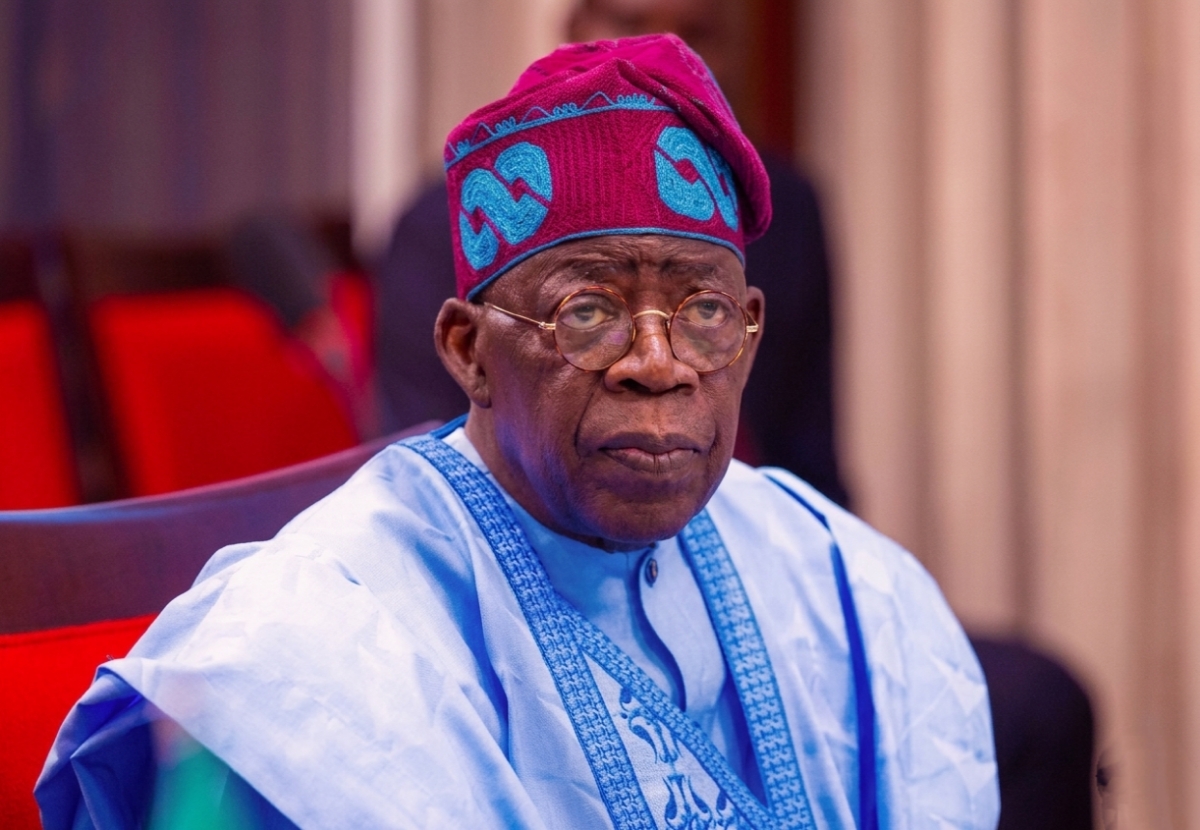
Bola Ahmed Tinubu - President Of The Federal Republic Of Nigeria
The Numbers That Started the Conversation
Let us begin with the data, because the concern being expressed by opposition politicians, civil society organisations, and political scientists is not based on abstract anxieties. It is based on specific, verifiable, and frankly remarkable numbers.
As of mid-March 2026, the APC controls 31 out of 36 state governorships, approximately 86 percent of Nigeria's states. This marks a historic level of sub-national control for any party in the Fourth Republic.
To understand how extraordinary this number is, consider the comparison that Nigeria's own political history provides. At the PDP's peak in 2007, the party controlled 28 of 36 states. That figure was considered an alarming expression of dominant party power at the time, the high-water mark of what critics called the PDP's stranglehold on Nigerian democracy. The APC in 2026 controls three more states than the PDP did at its most dominant. It controls 86 percent of Nigeria's sub-national governments. The five governors who remain outside the APC fold include Bala Mohammed of Bauchi on the PDP platform and Seyi Makinde of Oyo, one of the last standing figures of meaningful opposition governance, also on the PDP.
The numbers in the National Assembly tell the same story with even less room for comforting interpretation. The National Assembly, instead of acting as a check on executive excesses, has become a rubber stamp body. Opposition lawmakers who challenge defections are silenced through committee marginalisation, denial of speaking time, or outright suspension. The Assembly passes executive budgets and policies without scrutiny.
These are not the claims of opposition partisans alone. They are the assessment of analysts, civil society organisations, and even commentators who approach Nigerian politics without obvious partisan sympathy for the parties that have lost ground.
The Defection Machine: How It Works and Who It Has Swallowed
The primary mechanism through which the APC has achieved this consolidation is a wave of political defections that, by the assessment of those who track Nigerian politics professionally, has been unprecedented in its scale, its speed, and its brazenness.
Since President Bola Ahmed Tinubu assumed office in May 2023, Nigeria has witnessed a disturbing wave of defections. Governors from traditionally PDP strongholds such as Delta, Enugu, Akwa Ibom, and Rivers have abandoned their mandates to join the APC.
More recently, Kano State Governor Abba Kabir Yusuf moved to the APC after leaving the New Nigeria Peoples Party. Rivers State Governor Siminalayi Fubara was reported to have joined the ruling party in December 2025 amid intense political tensions. Plateau State Governor Caleb Mutfwang also dumped the PDP for the APC. And as of February 27, 2026, Adamawa State Governor Ahmadu Fintiri officially defected from the Peoples Democratic Party to the APC.
The political geography of these defections is striking. Delta, Enugu, Akwa Ibom, Rivers, Adamawa, Plateau, and Bayelsa were not peripheral PDP outposts. They were the party's strongholds, states where the PDP had won every governorship election since 1999, states whose governors were not fringe figures but central pillars of what remained of the opposition's institutional presence. Their departure did not merely reduce PDP's numbers. It hollowed out the party's organisational infrastructure in the regions where that infrastructure had been deepest.
Peter Ameh, former IPAC chairman, described the current streak of defections as the most damaging in Nigeria's political history. He accused the APC of prioritising defections over governance and warned that the trend undermines multiparty democracy.
The stated reasons for the defections have a formulaic quality that their repetition makes almost impossible to take at face value. Governors cite "alignment with the centre" for federal projects, the desire to serve their people more effectively by working with rather than against the federal government, and a genuine admiration for President Tinubu's leadership vision. Mbah, the lone PDP governor in the South East, offered a well-scripted but muted justification. "After a long walk, we have decided to leave the PDP and join the APC. Our vision has now found stronger reinforcement at the federal level. Our move is bigger than politics but about alignment with the centre."
Critics find this explanation unconvincing. Reports suggest that Enugu, even under the opposition, has recorded more tangible development in recent years than some APC-controlled states. What these defections truly demonstrate is a disregard for the electorate.
The more pointed criticism concerns the role of federal institutions in creating the conditions for defection. Chieftains of the opposition parties have accused the ruling APC of using the Economic and Financial Crimes Commission and other instruments of the state to coerce governors and other elected officials in opposition parties to defect to APC. A document was recently circulated in the media, alleging the establishment of a multi-agency task force by the APC-led federal government for a purported programme to arrest, detain, and prosecute those who resist.
The APC has denied these allegations consistently and forcefully. APC leaders argue dominance reflects voter preference and governance delivery, not subversion. President Tinubu himself has been categorical: "At no time in the past, nor any instance in the present, and at no future juncture shall I view the notion of a one-party state as good for Nigeria."
The denial is noted. But the pattern is also noted. And the pattern raises questions that a denial, however sincere, does not fully answer.
This Is Not the First Time: Nigeria's Recurring Drama of Dominant Parties
Here is where the historical arc of Nigerian politics becomes essential to understanding the present, because what is happening in 2026 did not begin with Tinubu, and the forces that are generating the current alarm are not unique to the APC. They are structural features of Nigerian politics that have expressed themselves, with varying degrees of severity, through every dominant party that the Fourth Republic has produced.
The dominance of the Peoples Democratic Party from 1999 to 2015, and subsequently the All Progressives Congress since 2015, has entrenched a system of rotating hegemonies rather than genuine electoral competition. Although Nigeria formally operates a multiparty system, electoral outcomes are often determined less by popular choice than by elite bargains, coercive deployment of security agencies, partisan judicial rulings, and manipulation of electoral institutions.
The PDP of 1999 was built on a coalition so broad that it included former military officers, traditional rulers, businessmen, academics, and politicians from every geopolitical zone. The PDP became the dominant political party in Nigeria in 1999, with considerable government control at both the national and state levels. For 16 years, the party won all presidential elections and maintained a majority in the Senate and House of Representatives. It controlled 28 states at its peak in 2007. It boasted of being the largest party in Africa, which was probably true. It also boasted it would rule for sixty years, which was definitively not.
While the 2015 defeat of the PDP was celebrated as a democratic breakthrough, the APC quickly replicated, and in some cases deepened, the authoritarian tactics of its predecessor: weaponisation of anti-corruption agencies, use of security forces to intimidate opposition strongholds, and strategic placement of loyalists in key electoral and judicial positions.
This is the pattern that serious scholars of Nigerian politics have identified, and it is important to name it clearly without allowing it to become a counsel of despair. Nigeria has experienced a sustained trend of de facto one-party dominance, initially by the Peoples Democratic Party and later by the All Progressives Congress. This dominance was evident across the presidency, legislature, and subnational authorities, despite the formal appearance of multiparty competition.
The question being asked in 2026 is not simply whether the APC is dominant. It is whether the APC's dominance in 2026 is structurally similar to the PDP's dominance in 2007, and whether the forces that eventually ended PDP's dominance are present now or are being systematically neutralised.
The Seeds of the PDP's Collapse: A Lesson the APC Has Been Warned About
The PDP did not fall in 2015 because Nigerians suddenly became more democratic or because opposition parties suddenly became more organised. It fell because of a specific combination of factors that created the conditions for a unified opposition challenge that the ruling party, drunk on its own dominance, was structurally unprepared to survive.
The first factor was internal fracture. In 2013, a significant split occurred within the PDP when a faction broke away to form the New PDP. This internal division, coupled with the formation of a united opposition coalition, the All Progressive Congress, posed a serious challenge to the PDP's hold on power.
The second factor was a unifying grievance. The issue of power shift was at the root of the mass defection of several senior northern politicians from PDP to APC. President Goodluck Jonathan's decision to seek election in 2011, and again in 2015, broke the bargain within the PDP to rotate the presidency between the North and South. This led to the withdrawal of many prominent northern politicians from the party.
The third factor was a credible, unified alternative. The APC was founded following the merger of four major opposition parties, namely the Action Congress of Nigeria, the Congress for Progressive Change, the All Nigeria Peoples Party, and the All Progressives Grand Alliance. This coalition of previously fragmented opposition parties was further bolstered by the defection of prominent PDP stalwarts, including five governors.
The fourth factor was public exhaustion. The PDP's sixteen years had produced rising insecurity with Boko Haram, widespread corruption allegations, and an economy that ordinary Nigerians felt had not delivered the prosperity that sixteen years of stable government should have made possible. Jonathan's administration was under fire for not doing enough to combat corruption or to eliminate the threat from the deadly Islamic insurgency led by Boko Haram, and many Nigerians felt that general living conditions had not improved.
When all four factors converged simultaneously, the PDP's structural advantages, its control of institutions, its access to state resources, its dominant legislative position, its 28 governorships, none of them were sufficient to hold back the tide. The party that had controlled 28 states and boasted of ruling for sixty years was reduced to a minority in the National Assembly and lost the presidency in a single election cycle.
Both the NPN and PDP remind us of an enduring truth: when ruling parties mistake the nation for their fiefdom and power for permanence, they sow the seeds of their downfall.
Is the APC Sowing the Same Seeds?
The question of whether the APC's current dominance contains within it the seeds of its own eventual collapse is one that honest analysis requires us to take seriously rather than dismiss as wishful thinking from opposition partisans.
Dominance generates a disproportionate electoral advantage in many ways in a developing country such as Nigeria. The control over critical state institutions at scale, the access to state resources and the avenues for patronage further magnify the attraction and the strength of the dominant party. But what confers advantage also produces vulnerability. And the vulnerability eventually becomes fatal, though the exact point of fatality is always difficult to predict.
The vulnerabilities that analysts identify in the APC's current position are not trivial.
The defection strategy that has fuelled the party's numerical expansion carries its own internal contradictions. The defection of some opposition governors and politicians to the ruling party does not mean they would win their states for the APC and President Tinubu in 2027. Political analysts note that many Nigerians say the defecting governors and politicians in Nigeria are only after political patronage and personal ambition and should not be taken seriously.
Each new defector brings with them not only their political support but their political ambitions, their factional loyalties, their internal enemies, and their expectation of reciprocal reward from the party they have joined. The APC faces the real prospect of internal crisis in multiple states following recent defections. At the heart of looming tensions is how the party's dominant power centres will share party tickets for state and National Assembly offices without triggering implosion.
This is exactly the pattern that destroyed the PDP. The party that absorbs everyone eventually becomes a party that cannot satisfy anyone, because the patronage expectations of a coalition that large inevitably exceed the resources available to fulfil them. Internal crises over primaries, over ticket allocations, over who gets the federal appointments and the contracts, these are the fractures that eventually produce the defections in the opposite direction, the five governors who left PDP in 2013, the parliamentary leaders who followed them in 2018, the cumulative haemorrhage that left the ruling party hollow at precisely the moment it needed to be solid.
During Buhari's first term, waves of defections led the party to lose its federal legislative majorities in 2018, with both Senate President Bukola Saraki and House Speaker Yakubu Dogara among the dozens of lawmakers that defected to the PDP. The APC, in other words, has already experienced the mechanism from the other side. It knows what it feels like when a dominant party's patronage networks fail to hold, because it was the beneficiary of that failure when the PDP experienced it.
The economic dimension is the other significant vulnerability. Nigerian voters have shown, repeatedly and emphatically, that economic performance ultimately matters. The APC won in 2015 partly because PDP's sixteen years had not delivered the economic transformation that Nigerians believed was possible with their country's resources. The APC's own economic record since 2015, and particularly the economic hardship that has accompanied the subsidy removal and currency devaluation of the Tinubu administration's early period, has created genuine public resentment that no amount of political defection can fully neutralise.
Former Senate President Wabara declared: "In 2027, impoverished and suffering Nigerians, not Governors, will decide the fate of the APC."
What the Opposition Actually Looks Like in 2026
The counterargument to the one-party state concern requires honest engagement, and honest engagement requires acknowledging that the opposition's weakness is not entirely the product of ruling party pressure. Some of it, perhaps a significant portion, is the product of opposition failure.
The PDP in 2026 is a diminished, internally divided, and institutionally hollowed shell of the party that governed Nigeria for sixteen years. Its national leadership disputes have consumed energy that should have been directed at rebuilding electoral competitiveness. Its most prominent national figure, former Vice President Atiku Abubakar, has run for the presidency multiple times without success and carries the political baggage of a long career that has attracted both loyalty and scepticism in roughly equal measure. The party has lost its southern strongholds, and even the handful of states it retains face the ever-present possibility of further defection.
The Labour Party's 2023 surge, which produced Peter Obi's remarkable presidential showing particularly among urban youth, was one of the most exciting political moments in Nigeria's democratic history. The Labour Party, which surged in 2023 with Peter Obi, faces internal turmoil and factionalization. The energy of the Obidient movement was real, the votes were real, and the hunger for a genuine alternative to the two dominant parties was real. But movements are not the same as organisations, and the Labour Party's institutional capacity has proven insufficient to translate the movement's enthusiasm into durable political infrastructure.
Since the opposition voices have dimmed, civil society organisations should be the voice of the people, writes one commentator, which is both an encouragement and an inadvertent admission of how much the formal opposition has abdicated.
The African Democratic Congress has positioned itself as a potential new opposition hub, attracting some defectors from both PDP and Labour Party. But it lacks the national spread, the institutional depth, and the name recognition that would make it an immediate vehicle for a credible 2027 presidential challenge. It is a potential rather than an actuality.
The uncomfortable truth that opposition supporters need to reckon with is that no amount of ruling party pressure can explain the entirety of the opposition's current condition. The PDP's internal dysfunction is its own product. Labour Party's institutional weakness predates the Tinubu administration's pressure. The opposition has been defeated not only by the APC's strategic aggression but by its own failure to build the kind of unified, institutionally solid, ideologically coherent alternative that convinced Nigerians to take a chance on change in 2015.
The 2015 Blueprint: What a Credible Challenge Requires
If the opposition is to mount a genuine challenge to APC dominance in 2027, the 2015 template is the most instructive available model, and it suggests a set of requirements that the current opposition landscape has not yet met but has not permanently foreclosed.
The emergence of the APC from the merger of four opposition parties transformed Nigeria's democratic context and helped break the electoral dominance of the Peoples Democratic Party. For the first time in the post-1999 period, an opposition party was determined to carve deeply into PDP's support base and challenge the party's national hegemony.
The 2015 coalition worked because it was genuinely broad, spanning the southwest's ACN base, the northeast and northwest's CPC and ANPP constituency, and the defecting PDP governors who brought their states' political machinery. It worked because it had a clear unifying message, change, that resonated with public frustration. It worked because it had a candidate, Muhammadu Buhari, who had credibility with the northern voter base that PDP's Jonathan could not match. And it worked because the PDP's internal fractures created the elite-level defections that gave the opposition coalition the resources and legitimacy to compete effectively.
The question for 2027 is whether any combination of these factors can be assembled. Moves by opposition politicians to form a coalition and present a common front against the ruling party, perhaps, could be the only obstacle that could scuttle the plan to give President Tinubu easy-ride to a second term in office.
The coalition possibility is not a fantasy. History suggests it is not only possible but the most likely mechanism through which any dominant party in Nigerian democracy is eventually challenged. The opposition kept organising, trying and failing, until they were able to assemble a formidable coalition and rally the country to their cause. They were not going about screaming every second about the need to stop Nigeria from becoming a one-party state or blaming the crises in their parties on the ruling party. They knew their task and they set about it.
The missing element in the current opposition landscape is not a recognition of the need for coalition. That recognition is widespread. The missing element is a sufficiently compelling unifying grievance, a Peter Obi-scale candidate with genuine cross-regional appeal, and the organisational discipline to subordinate individual ambition to collective strategy. None of these are impossible to find. All of them require more time and more deliberate effort than the current fragmented opposition has so far demonstrated.
The Constitutional Guardrail: Why a Formal One-Party State Is Unlikely
There is an important distinction that the most serious analyses of Nigeria's current situation consistently make, and it deserves to be stated plainly: what Nigeria appears to be drifting toward is a dominant-party system, not a one-party state in the formal or constitutional sense.
A formal one-party state, in the tradition of single-party rule that characterised much of postcolonial Africa, requires the abolition or effective elimination of opposition parties, the removal of constitutional provisions for competitive elections, and the entrenchment of a single party's monopoly through law rather than through electoral or political competition. None of these things are happening in Nigeria, and the structural features of the Nigerian state make them very unlikely to happen.
Nigeria's ethnic and regional diversity, its federal structure across six geopolitical zones with deeply entrenched sub-national political interests, its active and often combative civil society, its independent courts, its relatively free press, and its thirty-six-state federal architecture all create political forces that resist the kind of total capture that formal one-party rule would require. The same regional balancing that PDP tried to manage through zoning arrangements and that APC now manages through its own internal negotiations is a structural constraint on any single faction's ability to dominate completely.
Public discourse highlights fears of dictatorship or a one-party state by 2027 or 2032, though others counter that true one-party rule would require constitutional changes that Nigeria's diverse ethnic and regional interests make unlikely.
What is more realistic, and more worth worrying about in the near term, is the dominant-party scenario: a system in which opposition parties formally exist and elections formally occur, but competitive uncertainty is so diminished that the electoral process loses its function as a genuine mechanism for holding governments accountable and producing leadership change. That scenario is not Nigeria's future. In important respects, it is Nigeria's present.
The Democratic Cost: Why Dominance Without Accountability Matters
The case for concern about APC's current dominance is not primarily about which party governs Nigeria. It is about what a sufficiently dominant party does to the quality of governance, the accountability of power, and the civic health of a democracy over time.
The National Assembly, which should check any executive excesses, is compromised. Often, they massage Tinubu's ego and sing his praises. They fawn over this President rather than hold his feet to the fire. This is a recipe for autocracy.
When the legislature and the executive are from the same party and that party's dominance is so total that no significant opposition voice remains in the chamber, the constitutional mechanism of legislative oversight loses much of its practical force. Budget scrutiny becomes superficial. Appointment confirmations become ceremonial. Investigative hearings become stage-managed. The institutions that are supposed to create friction in the governance process, and that are supposed to serve as the mechanism through which the executive is held to account between elections, become extensions of the executive's own political project.
Nigeria today stands at a dangerous crossroads. This trend is not merely political manoeuvring, it is the slow but steady march toward a one-party state, a civilian dictatorship cloaked in democratic garb. History teaches us that one-party dominance rarely emerges from genuine competence or visionary leadership. Instead, it is often fuelled by opportunism, defections, and the erosion of institutions meant to safeguard democracy.
The longer-term consequence of this institutional hollowing is not merely that the current government faces less scrutiny than it should. It is that the habits, norms, and expectations of democratic governance erode over time, making it progressively harder to restore genuine competitive accountability even when the political conditions for it eventually return.
The Verdict: Concerning, Not Irreversible
Nigeria in March 2026 is not a one-party state. It is a dominant-party democracy in which the ruling party controls 86 percent of state governments, commands overwhelming legislative majorities, benefits from an enfeebled and internally divided opposition, and is approaching the 2027 elections from a position of structural advantage that has no precedent in the history of the Fourth Republic.
That is a genuinely concerning picture. It is not, however, an irreversible one.
Nothing lasts forever. APC will one day yield dominance to another party, the same way it displaced PDP. It is only a matter of time.
The mechanism of that displacement, when it comes, will probably look familiar. Internal fractures over the sharing of the party's enormous patronage resources. A unifying grievance that gives a sufficiently broad coalition of opposition forces a common cause. A candidate with genuine cross-regional credibility. Public exhaustion with economic hardship that no amount of political management can fully neutralise. These are the ingredients that ended PDP's dominance in 2015. They are not absent from the current political landscape. They are, for now, insufficiently assembled.
The APC's current leadership has been warned by its own history. Drunk on power, the PDP extended its reach through manipulation, internal imposition, and suppression of dissent. When public resentment peaked, elite defections birthed the APC, which toppled the PDP in 2015. A party that now risks repeating the same mistakes that led to its predecessor's fall.
History does not repeat itself in Nigeria's political space with the mechanical predictability of a natural law. But it rhymes loudly enough that those who are paying attention can hear it coming. The PDP boasted of sixty years. It got sixteen. The APC is not boasting quite so explicitly, but it is behaving in ways that students of Nigerian political history have seen before.
The 2027 elections will not be the end of this story. But they will be the first serious test of whether Nigeria's dominant-party moment is a transitional phase on the way to a more competitive multiparty system, or whether the conditions for that transition are being systematically foreclosed. That test is coming, whether the opposition is ready for it or not. Whether Nigerian democracy passes it depends on forces that are still, for now, in motion.