Ever Wondered How Bridges Stand in the Middle of Water?
Bridges are everywhere , helping us cross rivers, lakes, and even the sea. But have you ever paused to think: how do these massive structures stand strong in the middle of water?
The answer is a mix of smart engineering, clever techniques, and a little creativity. Let’s break it down in simple words.
1. Piles – Like Tree Roots Underwater
When the water isn’t too deep, engineers use long, strong poles called piles. These are driven deep into the river or sea floor, just like how a tree’s roots hold it firmly in place.
Sometimes the piles are placed straight, and other times at an angle (called battered piles) to add extra strength. On top of them, a solid platform is built, and the rest of the bridge stands above.
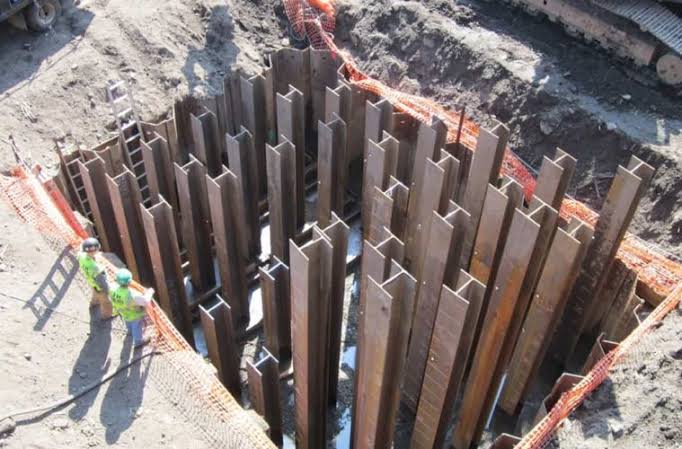
Straight Bridge Piles
2. Cofferdams – Making Dry Land in Water
Imagine building a wall in the middle of water, then pumping all the water out so you can work as if you’re on land. That’s exactly what a cofferdam does.
It’s like a giant watertight box made of steel sheets. Once the water is removed, workers can safely build foundations, pour concrete, and set up support pillars without worrying about waves or currents.
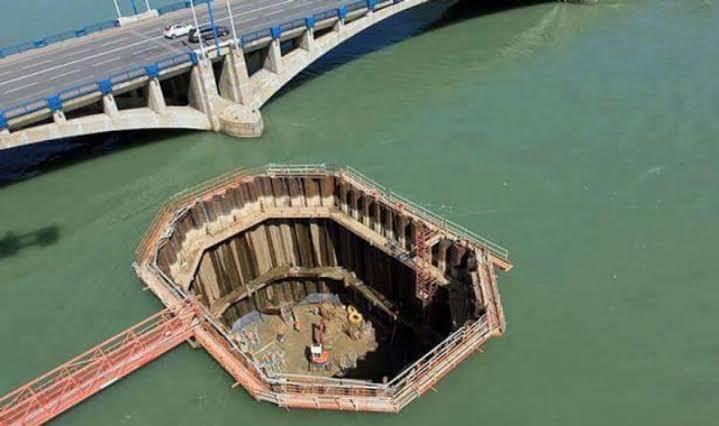
Cofferdams
3. Caissons – Giant Boxes That Sink
A caisson is another genius idea. It’s a huge hollow box, usually made of concrete. Sometimes it’s built on land, then floated to the spot where the bridge will stand.
Once in position, it’s slowly sunk into the seabed. Inside the caisson, workers pump out water or use compressed air to keep things dry while they build. Afterward, the caisson is filled with concrete, becoming a strong base for the bridge.
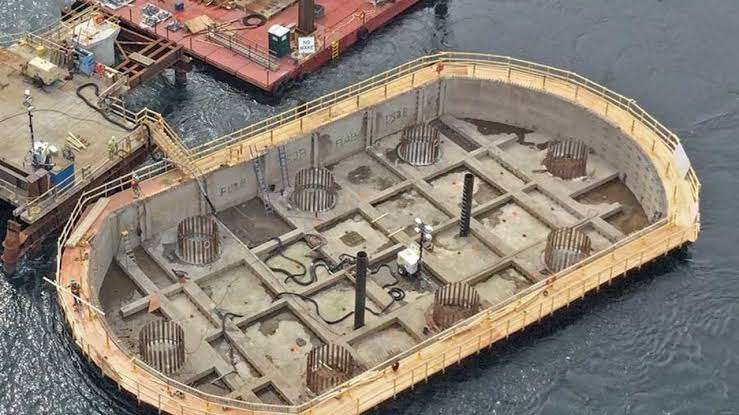
Caisson
Fun fact: some of the world’s tallest and strongest bridges are standing on caissons buried deep underwater.
4. Floating Bridges – Bridges That Actually Float
Yes, some bridges don’t touch the seabed at all—they float!
These bridges sit on giant hollow structures called pontoons that float on water, just like a boat. They are perfect for places where the water is too deep, or the seabed is too soft to dig into.
A famous example is the SR 520 Floating Bridge in Seattle, USA. It stretches over 7,700 feet and rests on massive pontoons anchored securely so it won’t drift away even in strong winds.
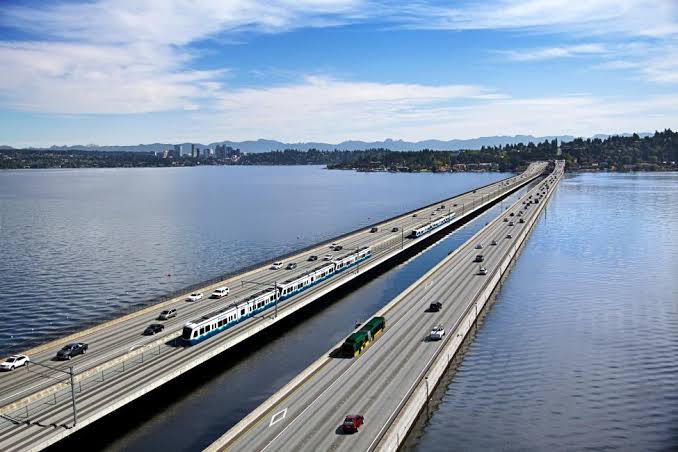
Floating Brigde
Why It’s So Impressive
• Engineers adapt different methods depending on how deep or strong the water is.
• These techniques balance strength, safety, and even care for the environment.
• Every bridge is a mix of science, art, and problem-solving at its best.