There is a moment in Asake's Umrah video that is almost impossible to watch without feeling something. The Afrobeats superstar, one of the most streamed Nigerian artists on the planet, a man whose concerts sell out arenas across continents and whose name trends on social media almost every week, stands among thousands of pilgrims in Mecca. He reaches toward the Black Stone embedded in the wall of the Kaaba, the holiest structure in Islam, and his hands are trembling. There are tears on his face. Around him the crowd presses close, and for a few seconds the camera captures something that no red carpet photograph, no magazine cover, and no carefully curated Instagram grid has ever quite managed to show: a famous man, stripped entirely of his fame, reaching for something greater than himself.
The video spread across Instagram, TikTok, and X within hours of being posted. Not because it was controversial, not because it was dramatic in the way that celebrity content is usually designed to be dramatic, but because it was genuine. Fans who had followed Asake's rise from Badmus to international superstardom found themselves watching something they had not expected and could not easily categorise. This was not a performance. This was a person.
That video, and the responses it generated, is the clearest single expression of one of the most significant and least discussed shifts in Nigerian celebrity culture in 2026. Faith, which has always been a private dimension of many celebrities' lives, is becoming public. It is becoming content. And in becoming content, it is becoming one of the most resonant and most emotionally powerful ways that Nigerian stars are connecting with their audiences in a media landscape that is increasingly saturated with material display and increasingly hungry for something that feels real.
Asake at the Kaaba: When Virality Meets Sincerity
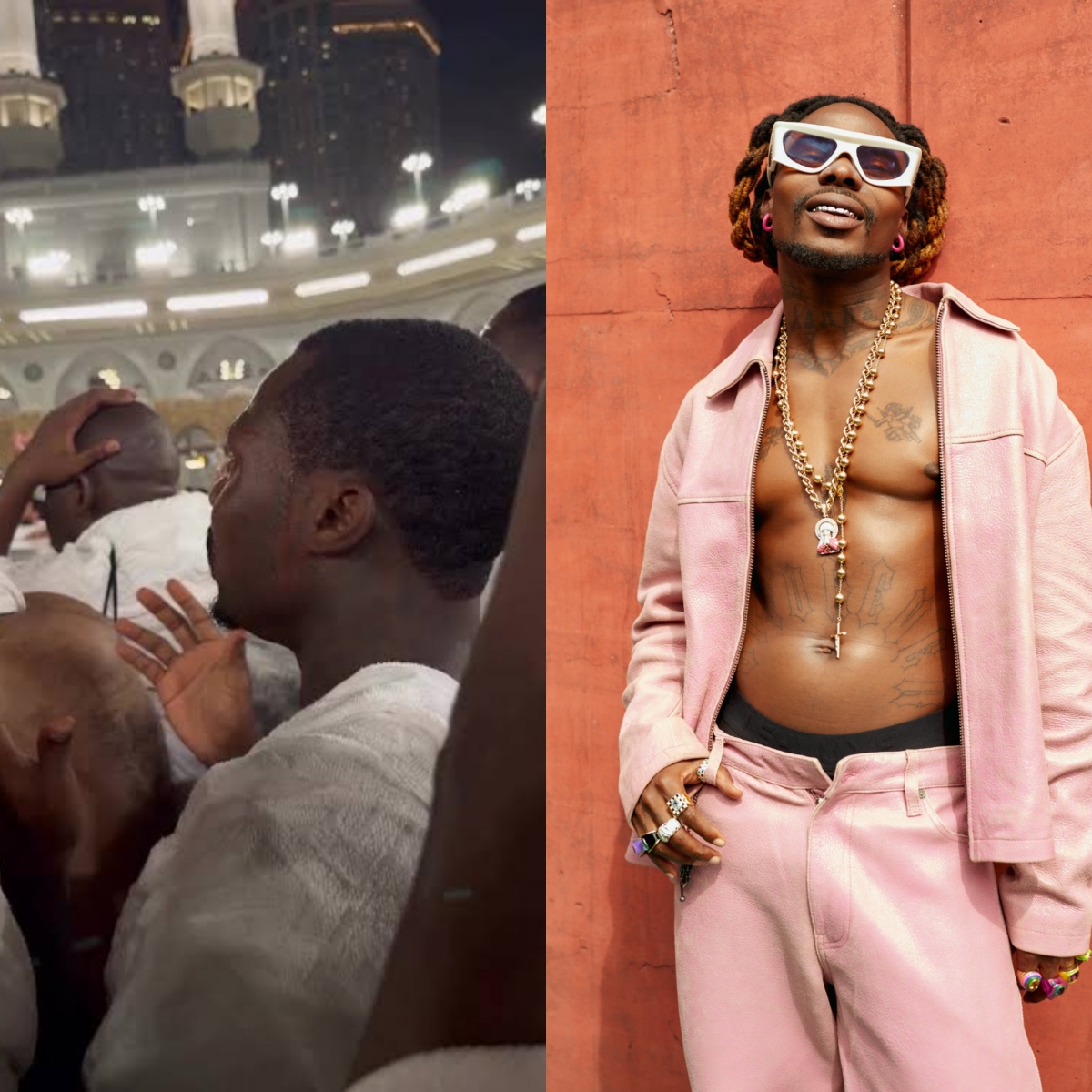
Asake
To understand why Asake's Umrah video landed the way it did, it helps to understand the specific context of what the Black Stone moment means in Islamic religious experience.
The Hajar al-Aswad, the Black Stone, is embedded in the eastern corner of the Kaaba in Masjid al-Haram in Mecca. Islamic tradition holds that the stone dates to the time of the Prophet Ibrahim, and touching or kissing it during the circumambulation of the Kaaba, the Tawaf, is among the most spiritually significant acts that a Muslim pilgrim can perform during either Hajj or Umrah. The stone is surrounded by millions of pilgrims at virtually all times, and reaching it, let alone touching it, requires navigating one of the densest human crowds anywhere on earth. For many pilgrims, the moment of reaching the Black Stone represents the emotional and spiritual peak of their pilgrimage experience, the culmination of a journey that may have taken decades to make.
For a celebrity of Asake's profile, performing Umrah is itself a significant public act. But what made his video extraordinary was not the pilgrimage itself. It was the visibility of what the moment cost him emotionally, and his apparent willingness to let that vulnerability be seen. In an industry that trains its participants to project confidence, control, and effortless success at all times, a video of a superstar crying while reaching for a sacred stone in Mecca is a radical departure from the expected content register.
Fan reactions reflected that departure immediately and powerfully. Comments across platforms ranged from expressions of deep religious solidarity to simple human recognition of a moment that transcended fan-celebrity dynamics. "This is real faith, not show-off," wrote one commenter, capturing the prevailing sentiment. "Asake showing us that stardom doesn't replace spirituality," wrote another. Many fans who do not share Asake's religious tradition commented on the power of the moment regardless, recognising in his tears something about the universal human need for meaning and connection that cuts across religious boundaries.
The virality of the video was not manufactured. No publicist designed it for maximum engagement. No brand partnership gave it a promotional purpose. It spread because it was genuine, and because genuineness, in a media environment where authenticity is constantly performed and rarely delivered, is still capable of stopping people in their tracks.
Adekunle Gold and Simi: Faith, Family, and the Moon
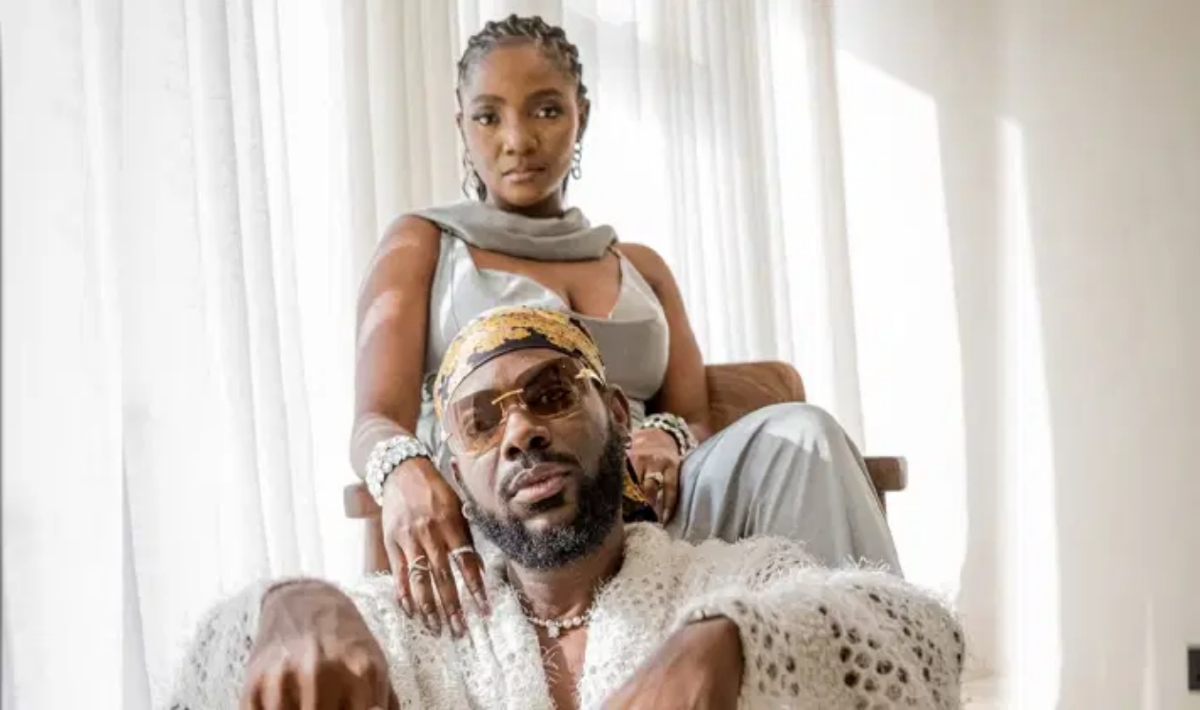
Adekunle Gold & Simi
The second major faith-content moment of the season arrived from an entirely different direction and served an entirely different cultural function, though it drew on the same well of genuine spirituality that made Asake's Umrah video resonate.
Singer-songwriter couple Adekunle Gold and Simi had been the subjects of swirling divorce rumours in the weeks leading up to Ramadan 2026. The rumours, which circulated primarily on gossip blogs and in fan community spaces, had reached a level of visibility that put them among the more persistent celebrity relationship narratives of the early year. Whether they had any factual basis was unclear, as is usually the case with celebrity gossip, but their persistence had created a narrative around the couple that was beginning to define their public image in ways they evidently found worth addressing.
The response they chose was neither a press statement nor a direct denial. It was a set of photos and videos shared during the moon-sighting that signals the end of Ramadan. The images, showing the couple together abroad, dressed modestly, smiling quietly under a night sky while the new crescent moon that marks the beginning of Eid was being sighted, carried a message that required no caption to communicate clearly. They were together. They were at peace. Their priorities, faith, family, and each other, were intact.
The accompanying message about gratitude, family, and faith was brief and did not engage with the rumours at all. It did not need to. The images themselves were the communication. Fans responded with a wave of warmth that swept across the comment sections of both their accounts and across the broader Nigerian entertainment conversation. "Marriage goals plus Ramadan goals," was one of the most shared responses. "They're proving love and God come first" captured another dimension of the reaction: the sense that the couple had found a way to address a media narrative about their relationship by demonstrating, rather than asserting, the values that actually govern their lives.
The strategic brilliance of the moment, if it can be called strategic given that it appears to have been entirely organic and genuine, was that it used a spiritual occasion to communicate something personal without reducing the spiritual occasion to a vehicle for personal PR. The moon-sighting posts were about Ramadan and Eid first, and about the state of the Adekunle Gold-Simi marriage second. That ordering felt right, and fans recognised it as such.
Tonto Dikeh: Prayer as Platform, Platform as Ministry
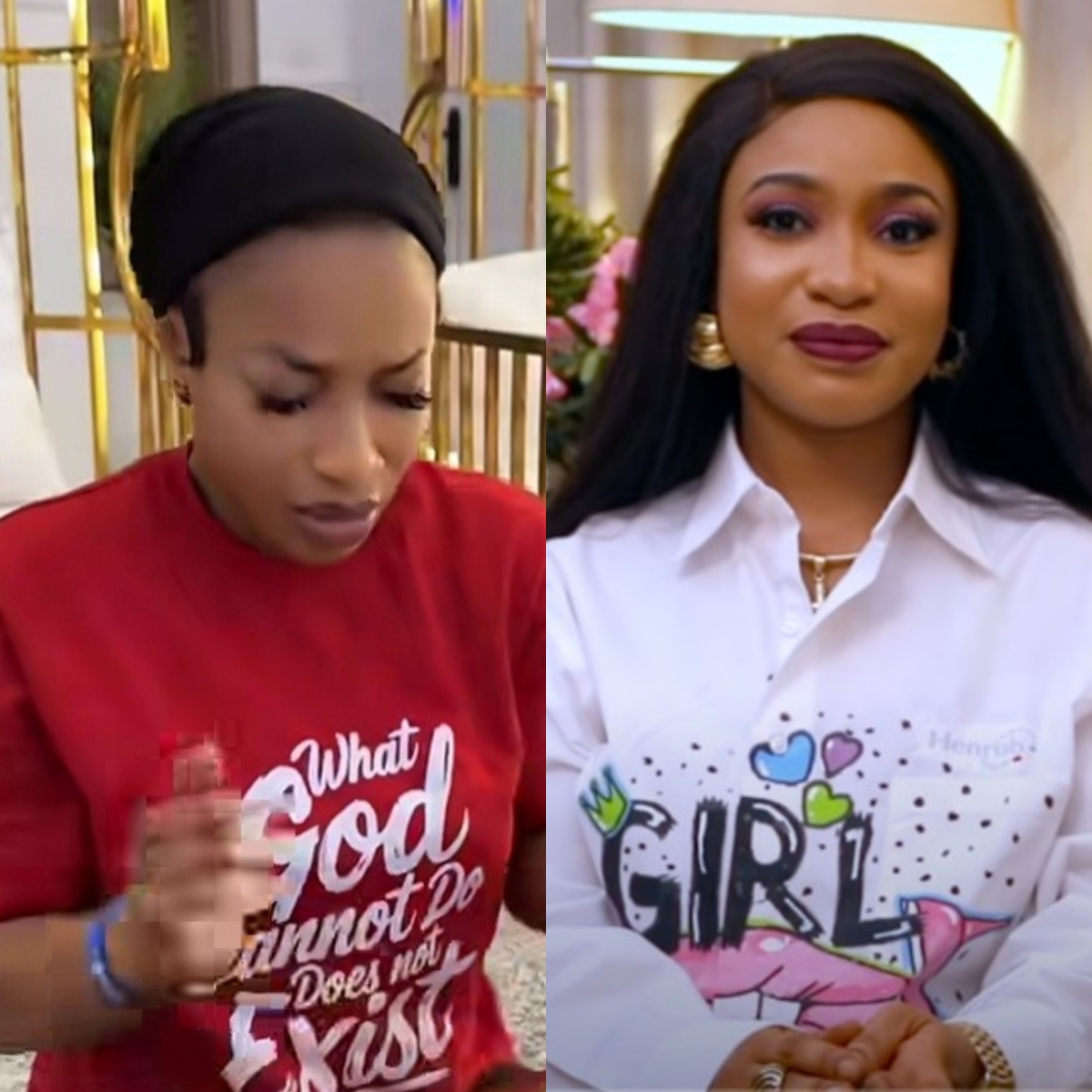
Tonto Dikeh
Tonto Dikeh's relationship with public faith expression is both longer-standing and more complex than those of Asake or Adekunle Gold and Simi, and her 2026 intensification of prayer content needs to be understood within that longer context.
The actress and philanthropist has been one of the most publicly discussed figures in Nigerian entertainment for over a decade, and her journey has included periods of significant personal turbulence: a highly publicised marriage and divorce, legal battles, political engagement, and the kind of sustained media attention that is as often hostile as it is admiring. Through many of those periods, her Christian faith has been a recurring reference point, both in how she has publicly described her own experiences and in how her fans have understood her survival and resilience.
In 2026, that faith expression has intensified and become more deliberate and more structured. Instagram Live prayer sessions, in which Dikeh leads prayers and invites her followers to participate in real time, have become a regular feature of her content calendar. The sessions cover territory including spiritual warfare, healing from past wounds, gratitude for present blessings, and intercession for followers who share specific needs in the comments. Thousands join the lives as they happen, and the comment sections during and after the sessions serve as something closer to a community prayer meeting than to a typical celebrity social media engagement.
What is notable about Dikeh's prayer content is the specificity of the needs it addresses. She is not offering generic positivity or vague encouragement. She is engaging with the actual texture of her followers' lives: relationships in difficulty, financial stress, health challenges, grief, anxiety, and the particular kind of spiritual disorientation that comes from living in a rapidly changing and often harsh social environment. Her willingness to engage with these specific realities, and her frankness about having lived through comparable difficulties herself, gives her faith content a credibility and an intimacy that purely aspirational celebrity content cannot match.
The response metrics are extraordinary. Thousands of Nigerians regularly join her live prayer sessions at hours that are not particularly convenient for social media consumption, which suggests that the draw is genuine spiritual need rather than entertainment. The comments during and after sessions include some of the most unguarded and emotionally honest expressions of personal struggle that appear anywhere in Nigerian social media, a reflection of the trust that Dikeh has built through the consistency and sincerity of her faith engagement.
The Broader Landscape: How Faith Is Spreading Across Nollywood and Afrobeats
The three moments described above are not isolated incidents. They are the most visible points in a broader pattern that is reshaping the cultural texture of Nigerian celebrity media in 2026.
Among Muslim artists, Ramadan has become one of the most content-rich periods of the year, and not primarily in the surface-level way of aesthetic Ramadan posts and branded partnership content. Artists including Omah Lay, Ayra Starr, and Fireboy DML have shared fasting reflections that engage seriously with what the practice of abstinence and spiritual focus means in their lives. Iftar meal posts have shown celebrities breaking fast in contexts that range from family homes to communal gatherings with less privileged communities, framing charitable giving as a natural extension of the season's spiritual emphasis rather than as a separate PR activity.
Umrah and Hajj content has become increasingly common across the full spectrum of Nigerian celebrity culture, and the framing of these posts has shifted noticeably in recent years. Where earlier pilgrimage posts were often framed implicitly around the achievement of having performed the pilgrimage, the cost of travel, the status of being in Mecca, more recent content frames the pilgrimage as personal renewal, an experience of humility and surrender rather than of accomplishment and display. Asake's video is the clearest expression of this shift, but it is not the only one.
Among Christian artists and actors, church attendance posts, devotional content, and personal testimonies about faith have been features of celebrity media for much longer than the current trend, given the deeply embedded culture of public Christian expression that characterises much of southern Nigerian society. What has changed is the degree of emotional vulnerability and personal specificity with which these expressions are now shared. Mercy Johnson's posts about prayer and family are increasingly frank about difficulty and dependence rather than simply celebratory of blessing. Funke Akindele's church content engages with the tension between public success and private faith in ways that feel genuinely confessional rather than merely performative. Toyin Abraham's testimonies about surviving industry pressure through faith speak to specific challenges rather than offering generic encouragement.
The intersection of faith and mental health discourse is one of the most significant dimensions of this broader trend. Many Nigerian celebrities sharing faith content in 2026 explicitly connect their spiritual practice to their mental wellbeing, describing prayer, scripture, and community as their primary resources for managing the anxiety, depression, and disorientation that public life can generate. This framing resonates particularly powerfully with younger fans who are simultaneously more willing to acknowledge mental health struggles than previous generations and more likely to understand faith as a resource for managing those struggles rather than a system of obligations to be performed.
Why 2026? The Factors Behind the Shift
The timing of this intensification of celebrity faith expression in 2026 is not accidental, and understanding the factors that have converged to produce it helps explain both why it is happening now and why it is likely to continue.
The first factor is what might be called the maturity of Nigerian social media culture. The first generation of Nigerian social media celebrities built their audiences primarily through aspiration and display, the projection of wealth, beauty, travel, and lifestyle that created parasocial relationships built around admiration and envy. That model remains active, but its limitations have become increasingly visible. Audiences who have followed celebrities for years have developed more nuanced relationships with their parasocial bonds, and they are increasingly able to distinguish between content that is genuinely shared and content that is carefully constructed to appear genuine. In that environment, authentic vulnerability, of which sincere faith expression is among the most powerful examples, cuts through the noise in ways that polished aspirational content cannot.
The second factor is the demographic reality of Nigeria's celebrity class. Many of the most prominent figures in Nollywood and Afrobeats in 2026 are in their late twenties to mid-forties, a life stage at which the questions that religious practice addresses most directly become more pressing. Marriage, parenthood, career plateaus, the deaths of parents and older relatives, health scares, and the accumulating experience of how little material success resolves the fundamental questions of meaning and purpose: all of these push people toward spiritual reflection regardless of their profession or their public profile. The celebrities sharing the most powerful faith content in 2026 are not discovering religion for the first time. They are engaging with longstanding faith commitments at a life stage where those commitments feel more urgent and more relevant than they may have in earlier years.
The third factor is the cultural context of Nigeria itself. Nigeria is one of the most intensely religious societies on earth, with both the Muslim north and the Christian south maintaining high levels of active religious practice and deep integration of faith into daily life across every social class. For Nigerian celebrities, sharing faith content is not a departure from mainstream cultural norms. It is an alignment with them. The surprise, if anything, is that it took the celebrity class as long as it did to bring its faith expressions into the same public space as its fashion choices and its travel posts.
The fourth factor is the global normalisation of athlete and celebrity faith expression that has created permission for Nigerian stars to be openly religious in their public platforms. Figures including Mohamed Salah, whose prostration after scoring goals has become one of the most recognisable images in global football, and Khabib Nurmagomedov, whose Islamic faith was a central and openly expressed dimension of his public identity throughout his MMA career, have demonstrated to a global audience that elite-level achievement and sincere religious expression are not only compatible but can reinforce each other's authenticity in the eyes of a watching public.
Faith as the New Flex: What the Phrase Actually Means
The phrase "faith as the new flex" has circulated widely in discussions of this trend, and it deserves both acknowledgment and some interrogation, because it captures something true but risks misrepresenting something important.
The phrase is true in the sense that, in the Nigerian celebrity media landscape of 2026, publicly expressed faith does carry a certain social currency that it may not have carried in the same way in an earlier period dominated by material display. Being seen in Mecca, leading a prayer session with thousands of followers, sharing a moon-sighting moment with your spouse: these are things that generate positive social responses, that attract admiration and engagement, and that build a specific kind of public image. In that functional sense, faith expression performs some of the social signalling work that designer labels and luxury travel used to perform more exclusively.
But the phrase risks misrepresenting what is most interesting and most significant about the trend if it implies that the faith expressions being shared are primarily performative, that Asake was reaching for the Black Stone because he knew it would generate engagement metrics, or that Tonto Dikeh is leading prayer sessions as a content strategy rather than as an expression of genuine religious commitment. The most powerful moments in this trend, the ones that actually generate the responses they generate, are powerful precisely because they are not performative. They are genuine, and audiences who are highly practised at identifying the difference between genuine and performed sincerity are responding to them as such.
The deepest truth of the "faith as the new flex" formulation is not that celebrities have discovered that religion generates good content. It is that a media culture saturated with material display has created conditions in which genuine spiritual humility is genuinely distinctive, and therefore genuinely attention-capturing. In a world where everyone is performing wealth and success, the person who publicly surrenders to something larger than themselves stands out not because they are performing surrender but because the surrender is real, and its reality is visible.
What This Means for Fans: Community, Comfort, and Connection
The audience dimension of this trend is as significant as the celebrity dimension, because the faith content that Nigerian stars are sharing in 2026 is not being received passively. It is generating communities.
Tonto Dikeh's prayer sessions are the most obvious example. The thousands of people who join her lives, share their needs in the comments, and return session after session are not simply consuming celebrity content. They are participating in something that functions, for many of them, as genuine spiritual community. The prayer that Dikeh leads is not a performance of prayer designed to look good on camera. It is, by the evidence of the responses it generates and the people who show up to participate, a real prayer experience for the people who join.
Asake's Umrah video generated a different kind of community response. Nigerian Muslims who had not previously seen a celebrity of his profile express this kind of sincere faith publicly found in his video a validation of their own faith that carries a particular social power. When someone whose cultural status is high enough to be beyond question chooses publicly to humble themselves before God, it makes that act of humbling culturally visible in a way that purely private faith expression cannot achieve. The thousands of Nigerian Muslims who shared Asake's video were not merely spreading entertainment content. They were participating in a public affirmation of values that they hold and that they felt his video honoured.
Adekunle Gold and Simi's moon-sighting posts generated yet another kind of community response: the affirmation of love anchored in shared faith as a model for relationship that their followers found both aspirational and achievable. Their relationship is not presented as extraordinary. It is presented as a choice, consistently renewed, to put certain things first. The faith dimension of their content gives that model a grounding that purely romantic gestures cannot provide, and their followers, many of whom are young Nigerians navigating the relationship landscape of a society in rapid social change, respond to that grounded model with genuine emotional investment.
The Industry Question: Genuine or Strategic?
The question that arises in any analysis of celebrity behaviour, whether any given action is genuine or strategic, is particularly complex in the context of faith expression, because faith is one of the domains of human experience most resistant to external verification of sincerity. We cannot know what is in Asake's heart when he reaches for the Black Stone, or in Tonto Dikeh's when she leads her prayer sessions, or in Adekunle Gold's and Simi's when they share their moon-sighting moment.
What we can observe is the consistency and the specificity of the faith expressions being shared, and these observations support a reading of genuine sincerity rather than strategic calculation. Strategic faith content tends to be generic and safe, invoking religious sentiment broadly without engaging with the specific texture of religious practice. The content described in this article is specific: a particular moment at a particular holy site, a particular religious event observed in a particular way, a particular style of prayer that engages with particular human needs. Specificity of this kind is the hallmark of genuine rather than performed religious engagement.
We can also observe the personal cost that some of these expressions involve. Asake's crying at the Kaaba is not a strategically calculated image for a Nigerian male celebrity in an industry that rewards projected toughness. It is a departure from the expected performance of masculinity that carries social risk, the risk of being seen as weak, emotional, or insufficiently cool for a global music star. That he shared it anyway is evidence not of strategic calculation but of genuine feeling strong enough to override the calculations that strategic image management would have recommended against.
The industry's response to the trend is also telling. If faith expression were purely strategic, we would expect it to be uniformly positive in its public reception, since the strategy would only work if it generated goodwill. But some celebrities who have shared faith content have faced criticism: accusations of hypocrisy, challenges about the consistency between their public and private conduct, and scepticism from fans who remember earlier controversies. The fact that faith expression carries these risks, and that celebrities are sharing it anyway, suggests that something more than strategic calculation is driving the trend.
What the Trend Reveals About Nigeria in 2026
At a broader level, the intensification of celebrity faith expression in 2026 reflects something about the state of Nigerian society and culture that goes beyond the entertainment industry.
Nigeria in 2026 is a society under extraordinary economic pressure. Inflation has remained high, the naira has experienced sustained depreciation, and the cost of living has risen sharply enough to affect the daily lives of Nigerians across every income level. Youth unemployment remains a persistent and severe challenge. The security crises that affect the north, the middle belt, and increasingly the south create a background of anxiety and loss that touches families across every region and every demographic group.
In this context, the turn toward faith among public figures is not separate from the broader social reality. It is a response to it. When life is economically precarious, when security is uncertain, and when the gap between the promise of modern prosperity and the reality of daily struggle is wide and visible, the resources that faith provides, community, meaning, perspective, and the experience of surrender to something larger than individual circumstance, become more urgently relevant rather than less.
The celebrities sharing faith content in 2026 are, in many cases, reflecting back to their audiences an experience that those audiences recognise from their own lives. The turn to prayer when human resources have been exhausted, the pilgrimage as an act of gratitude and renewal rather than of status display, the moon-sighting as a moment of connection with something ancient and communal in a world that often feels new and isolated: these are not experiences unique to the famous. They are human experiences, and the celebrities who share them are, in that sharing, becoming more rather than less relatable to the people who follow them.
The Faith That Fame Cannot Replace
Asake's tears at the Kaaba are the image that will define this moment in Nigerian celebrity culture when it is looked back upon. Not because they were planned or produced, but because they were real. Because they showed a man who has achieved more material success than most people can imagine, standing in a crowd of pilgrims where his fame made no difference whatsoever, reaching for something that his success could not provide and that only surrender could reach.
That is the story of faith in 2026's Nigerian celebrity culture. Not a strategy, not a brand extension, not a content pivot. A genuine human response to the limits of everything that fame and wealth and industry recognition can offer, and the discovery, made publicly and vulnerably, that those limits are real regardless of how spectacular the achievement on the other side of them.
Adekunle Gold and Simi standing under a moon-sighting sky, choosing to let an ancient religious moment speak for the state of their marriage rather than a press statement, is the same story. Tonto Dikeh leading prayer sessions for thousands of Nigerians who need to be prayed for, and finding in that practice both a ministry and a community that her acting career alone could never have built, is the same story.
The story is not that Nigerian celebrities have discovered a new content strategy. The story is that Nigerian celebrities are human beings, living in a deeply religious society, at a life stage when the questions that religion addresses feel urgent and immediate, in a media environment where genuine vulnerability cuts through the noise of manufactured aspiration like nothing else can.
Faith has always been the new flex. Nigeria is simply allowing its famous people to say so out loud.