In parts of Nigeria, kidnapping is no longer an isolated criminal act. It has evolved into a system. In some regions, abduction functions less like chaos and more like a business model. Victims are taken. Negotiations begin. Payments are made. The cycle repeats.
This is what analysts increasingly describe as a ransom economy. And understanding it requires stepping back from headlines and looking at incentives, structures, and gaps in governance.
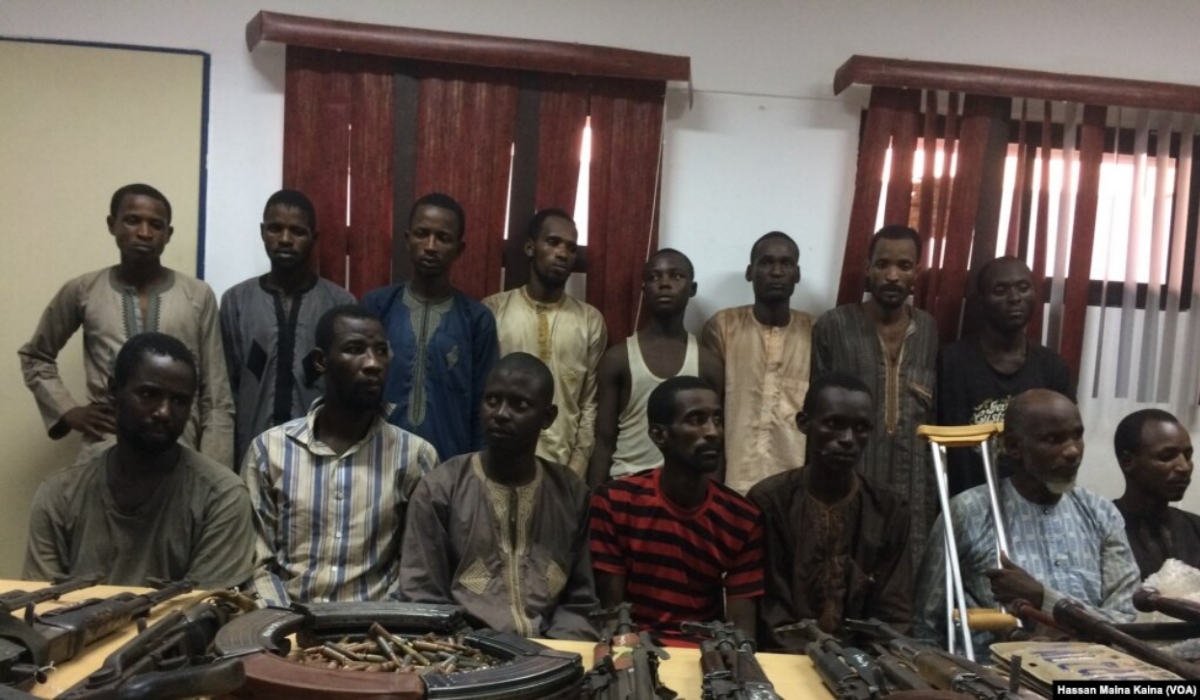
Arrested Bandits
From Political Leverage to Revenue Model
Kidnapping in Nigeria has not always looked the same. In the Niger Delta during the 2000s, abductions often targeted oil workers and were tied to political grievances. The objective was leverage.
In contrast, in northwestern states such as Zamfara State and Kaduna State, many armed groups commonly labeled as “bandits” operate primarily for financial gain. Ideology is often secondary. The target pool has widened to include farmers, traders, schoolchildren, and travelers on highways.
The shift matters. When kidnapping becomes primarily about revenue, it becomes scalable.
How the Ransom System Works
The mechanics are disturbingly structured.
Armed groups raid villages or intercept vehicles. Victims are moved into forest camps in remote areas where state presence is limited. Families are contacted, sometimes through community intermediaries. Negotiations begin.
Ransom payments vary widely. Some families sell land or livestock. Others rely on community fundraising. In some cases, payments include supplies like food or fuel in addition to cash.
Each successful transaction reinforces the model. If ransom is paid, kidnapping becomes validated as a reliable income stream. Over time, this predictability creates what economists would recognize as an incentive loop.
Why It Persists
Crime thrives where enforcement is weak and opportunity is strong.
Large forested areas in northwestern Nigeria provide physical cover. Local policing units are often under-resourced. Rural communities may lack rapid security response. Cross-border arms flows across the Sahel region increase weapon availability.
Youth unemployment also plays a role. In areas with limited formal economic opportunity, armed groups offer income, however dangerous or unstable.
Organizations such as the Nigeria Security Tracker and the International Crisis Group have documented patterns showing how cycles of violence persist where governance gaps remain unresolved.
The pattern is not random. It is systemic.
The Hidden Costs Beyond the Ransom
The most visible damage is the trauma of victims and families. But the broader consequences are structural.
Schools shut down after mass student kidnappings, disrupting education for thousands. Farmers abandon land out of fear, reducing agricultural output and worsening food insecurity. Communities relocate. Trust in state institutions erodes.
When citizens begin negotiating directly with armed groups because they see no alternative, the social contract weakens. The long-term risk is not only insecurity but normalization.
Breaking the Cycle
Addressing a ransom economy requires more than military deployment. It requires rebuilding local security capacity, strengthening intelligence coordination, improving economic opportunity in vulnerable regions, and restoring trust between communities and authorities.
Kidnapping flourishes in environments of fragility. Reducing it means strengthening the systems that make violence less profitable than stability.
The story is not just about crime. It is about incentives, institutions, and the long-term resilience of communities.